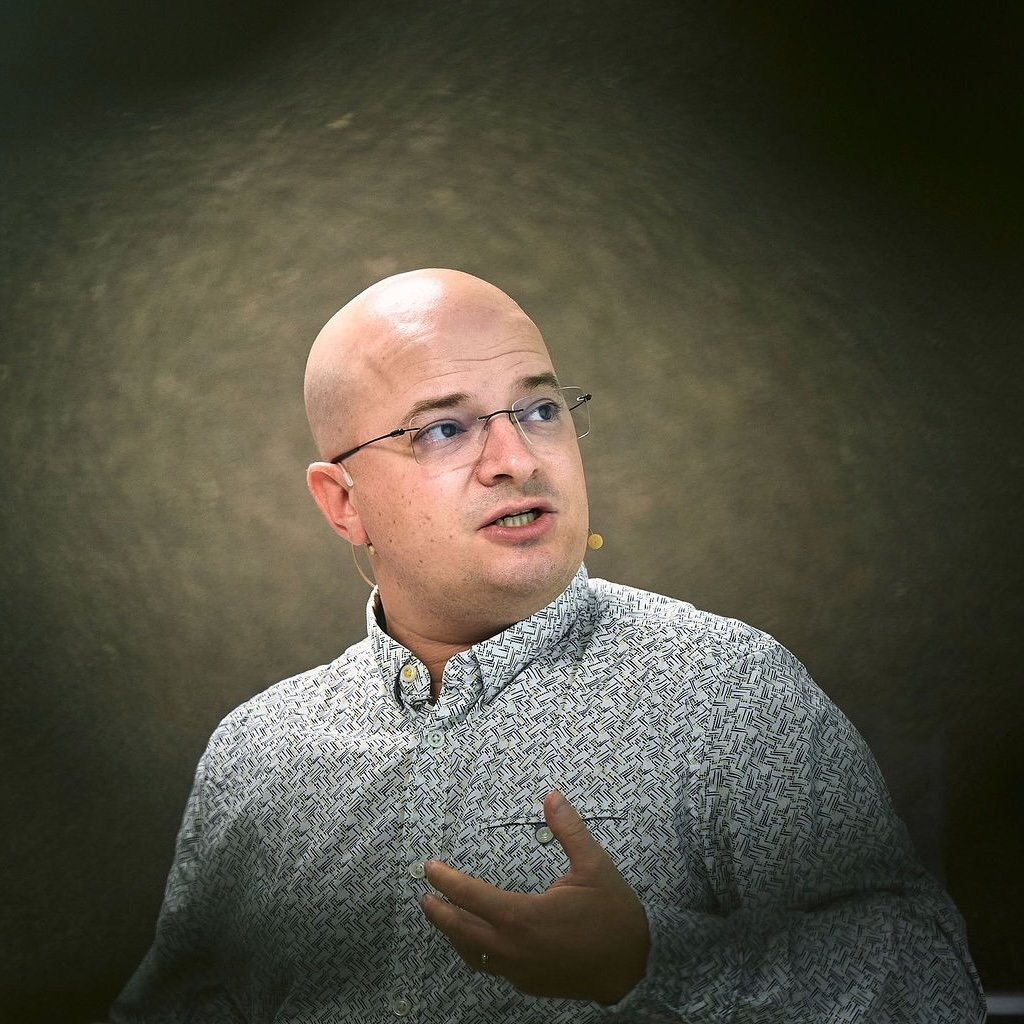
ACCU on Sea 2026 - Trip Report
Folkestone (UK), 17-20 June 2026
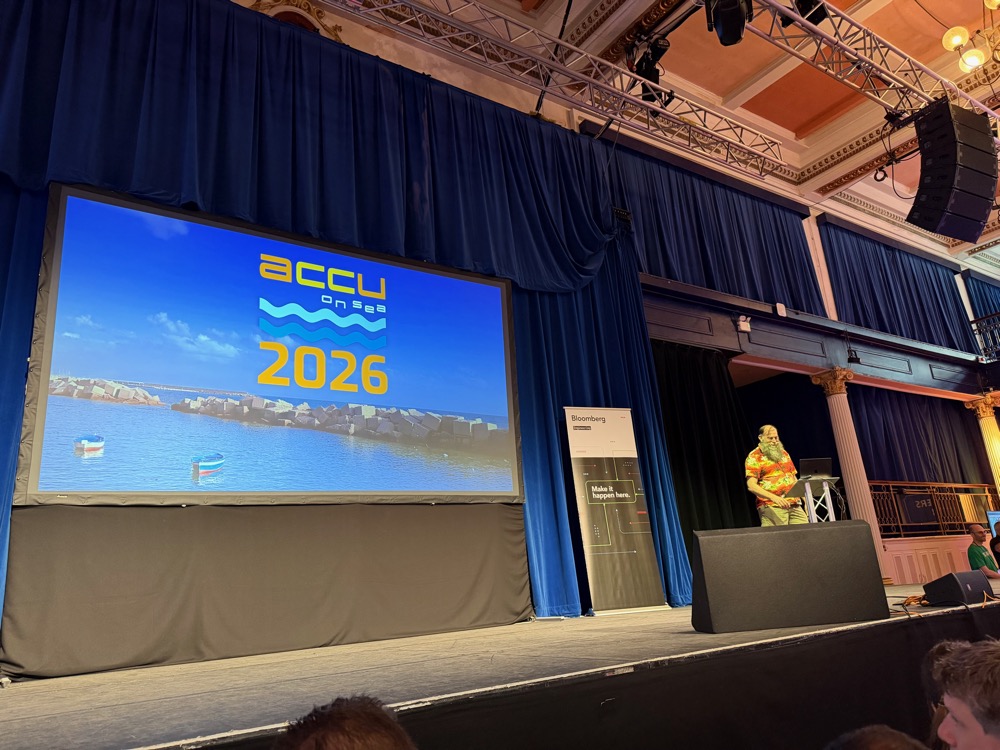
Last week I swapped the usual conference hotel ballroom for a Victorian hall perched on a cliff above the English Channel. ACCU on Sea 2026 - the UK’s international developer conference by the sea - took over Leas Cliff Hall in Folkestone.
About ACCU on Sea
For the uninitiated: ACCU on Sea is the international developer conference that takes place by the sea, in the UK. It’s what you get when two much-loved communities - the ACCU Conference and C++ on Sea - join forces into a single, blockbuster event.
The ACCU Conference is one of the longest-running developer conferences in the world. Established by the ACCU organisation back in 1997, it has always been open to the whole community and has consistently sat at the forefront of what’s happening in the world of software development.
And while its roots are firmly in C and C++, that community expanded long ago to embrace other language ecosystems. Across the programme you should expect content on C#, D, F#, Go, Haskell, Lisp, Python, Rust, Swift, and more - alongside the perennial sessions on how to do programming right.
This year, C++ and safety, Rust and AI topics happened to dominate my own schedule - but a few rooms over, the conversation looked completely different, and that breadth is precisely the point of this event.
The Venue
ACCU on Sea is hosted at the Leas Cliff Hall in Folkestone, Kent, UK, overlooking the English Channel. This historic seaside town is also home to the Channel Tunnel and, as such, has excellent links to the rest of Europe.
The Leas Cliff Hall is a working theatre that also has a dedicated conference suite. Built into the cliffs, and with floor-to-ceiling glass overlooking the sea on three sides, the views are spectacular - if the classic British fog doesn’t get in the way. 😄

The Sessions
Four packed days, five tracks, a who’s-who of speakers, and a coffee queue with a sea view.
https://accuonsea.uk/2026/schedule/index.html
Here are my favorite sessions and a few impressions. If there’s one sentence that sums up the week: AI and memory safety were the two gravitational fields that everything else orbited.
Wednesday 17 June
KEYNOTE - The Next 20 Weeks of Systems Engineering
Andrei Alexandrescu - Principal Research Scientist, NVIDIA
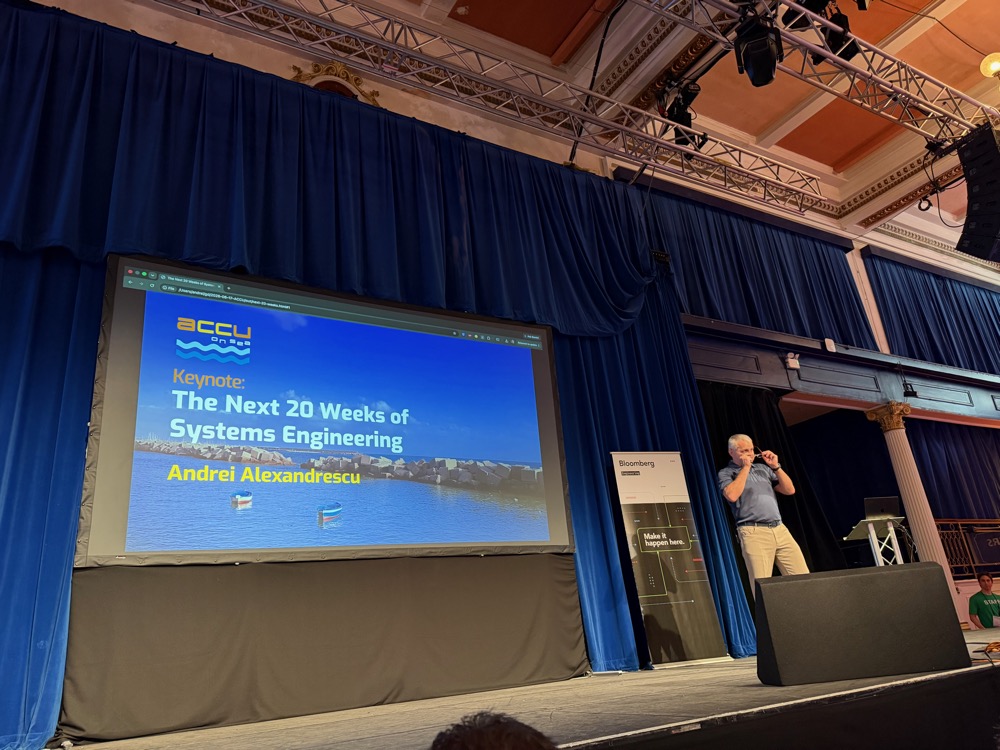
This was, for me, the most impactful session of the whole conference - the one I’m still turning over in my head a week later. It opened with a running gag that doubled as a thesis: the title slide read “The Next 20 Years,” then “Months,” then “Weeks” (“I had high ambitions,” he deadpanned). The shrinking horizon is the point - nobody can credibly forecast 20 years of anything right now. So instead of another “how I used AI” war story, Andrei promised “a few considerations that will stand the test of time,” all anchored on a single claim: abstraction has been, is, and will remain the central organizing principle of software development. He even staged the talk as a play - “Abstraction: A Drama in Five Acts.”
Act I - How did we get here? A brisk history of complexity. The 1980s-90s “Software Crisis” produced a parade of would-be saviours - heavyweight methodologies, CASE tools, non-text and specification languages - united by one instinct: anything as long as it’s not code, abstracting the problem away from its implementation. By the 2000s the industry had inverted that into “the code is the design,” and built open source, design patterns, tests, source control, and Agile around that idea.
Act II - The Age of Inversions. The heart of the talk, and the slide everyone photographed. Now that code production is commoditised (and automation keeps accelerating it), the balance tips hard from producing code to reviewing, understanding, and being accountable for it. Programming fluency gets de-emphasised, and a set of genuine role reversals emerges - from creator in control of primitive systems to accountability sink of AI systems.
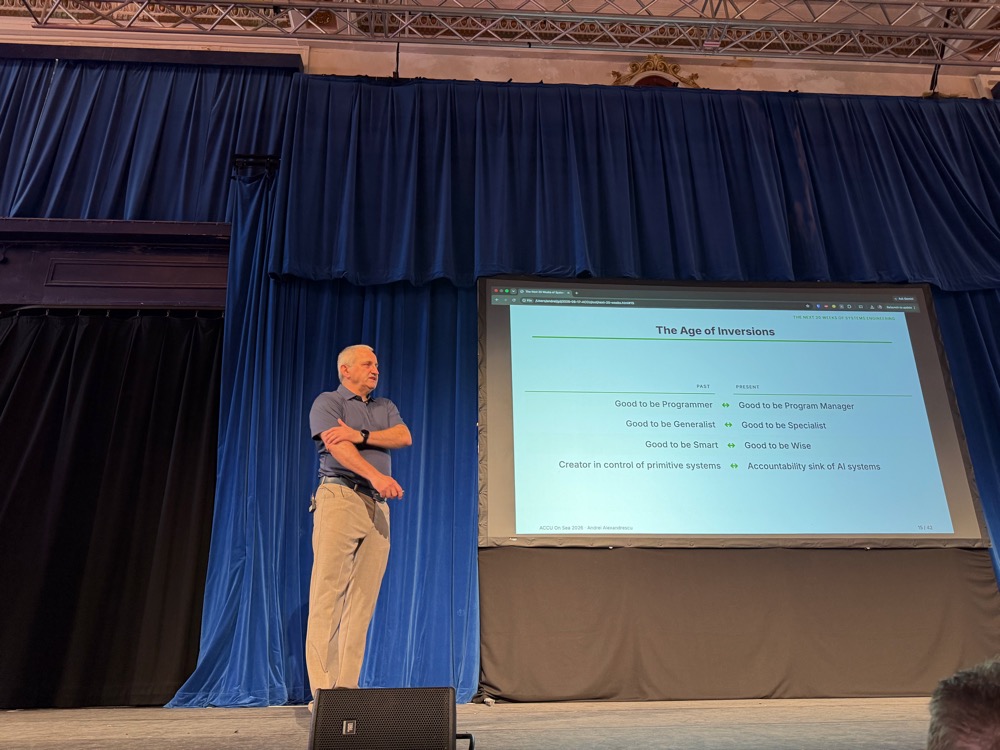
The asides here were some of my favourites. Metacognition is on the rise: we now ask the agent how to use the agent - tools that teach us how to use them, which really is unprecedented. The relationship between specification and tooling has flipped from “precise spec, dumb tools” to “vague (i.e. highly abstract) spec, smart tools.” And the ultimate abstraction, he argued, is the phrase “as appropriate” - as in “add unit tests as appropriate” or “use the Visitor pattern as appropriate” - which only works on top of decades of shared, high-level understanding. One line stuck with me: the more knowledge you have, the less creativity you need. The caveat: inversions like these aren’t unique in history, and we’ll oscillate between dystopian and utopian readings for a while yet.
Act III - On to Babel: the role of languages. Why keep evolving C++26 at
all? Because each headline feature is really a new abstraction: Contracts
abstract obligation; Reflection abstracts code itself; and
std::execution, std::simd, and metaprogramming follow suit - features
earn their keep in proportion to the abstraction they add. But he raised an
unsettling possibility: a “post-Cambrian” era for languages. Incumbency may
be a language’s single biggest advantage, and there’s a “curse of novelty” -
an AI can pick up a new language by analogy to the ones it already knows, yet
the whole point of a new language is its new idioms. We may be watching the
end of a uniquely creative era of language design.
Act IV - Abstraction of abstraction. The technical core, with C++
metaprogramming as the cautionary tale: template metaprogramming is a
“rigorously unstructured,” accreted abstraction whose Turing-completeness was
discovered, not designed. Reflection is the way out
(static_assert(metaprogramming == programming): types become values, you
metaprogram by ordinary programming, then expand back to types - “perfect
for AI and for us”). The insight that landed hardest: even if an AI can
generate any code you ask for, you can define any instrumented class, but
without reflection you can’t define the notion of an instrumented
class. Abstraction is what lets you name and reuse the concept rather than
the instance - and that is exactly what has to survive code generation,
because instantiation deletes abstractions and asking an AI to reconstruct
them afterwards is wasteful. Better abstractions, he noted, help AIs for the
same reason they help people: both have finite reasoning resources (for an
LLM, your context window).
Act V - Going forward. He closed with seven deliberately provocative predictions:
- AI will define and use its own abstractions
- Software projects will increase in size
- “As-if” on steroids is coming to compilers
- Compilers will be architected for dialog with agents
- Prompt engineering has no future
- A possible revival of specification languages
- We are in the bubblesort era of AI-assisted coding
The final slide was simply “We Will Adapt.” Coming from someone who had just walked us through his own “checkered personal record” of past predictions (with a wry nod to Gartner’s ~90% miss rate), it didn’t land as hubris - it landed as the most durable takeaway of the week.
Rust for the Curious C++ Developers
Victor Ciura (my talk)
Then it was my turn. Right after Andrei set the tone - and following the
coffee break - I took the main stage to dig into a question close to my
heart: what is it actually like to come to Rust from C++? I walked
through the gaps, the needs, the gems, and the tooling a C++ developer
should know about - where my favourite C++ features show up (or don’t) in
Rust, the idiomatic parallels between successful strategies and features in
both languages, and their respective strengths. There’s a wealth of good
guidance out there - guidelines, opinionated best practices, established
idioms - but it’s tangled up with a fair few myths, and I took the
opportunity to dissect a few of the most impactful ones. The throughline,
and the reason I keep coming back to this talk: what have we learned that
we can bring back to our day-to-day C++?
[ I was a little too busy on stage
to grab a photo of this one. ] 😄
Contracts, safety and correctness
Lucian Radu Teodorescu
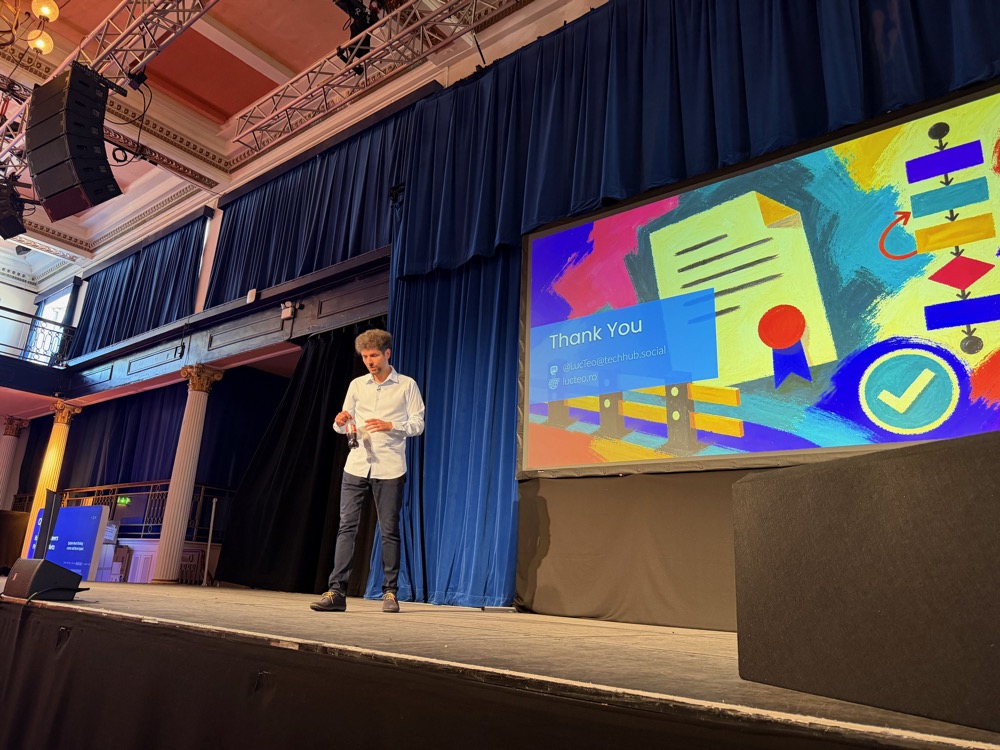
Since 2023, “safety” has dominated the C++ conversation - and become so overloaded that some people now avoid the word entirely. Lucian carefully untangled safety from correctness and positioned C++26 Contracts within that landscape: what they can and cannot guarantee, and how to use them to genuinely improve correctness (with practical examples). He closed by stepping back to a small set of design and coding practices for safer, more reliable C++ that go beyond contracts.
Postmodern Programming
Tony Van Eerd
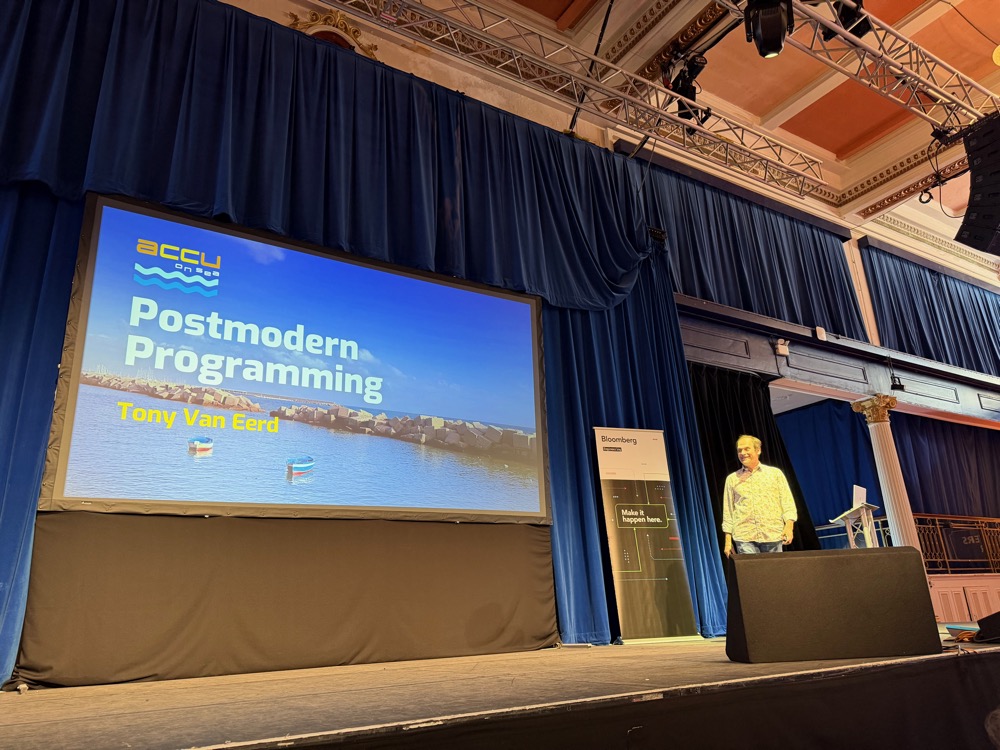
Tony’s most-requested talk, and you can see why. An unusual, free-wheeling meditation on programming, postmodernism, communication, functions, and context - with the lofty, semi-serious goal of fundamentally changing how you think while you code. Hard to summarize, very much worth seeing. Dr. Seuss would approve 😄
⚡ Lightning Talks
The evening lightning talks are an ACCU institution: five minutes each, fast, varied, and occasionally profound. The line-up was a joy.
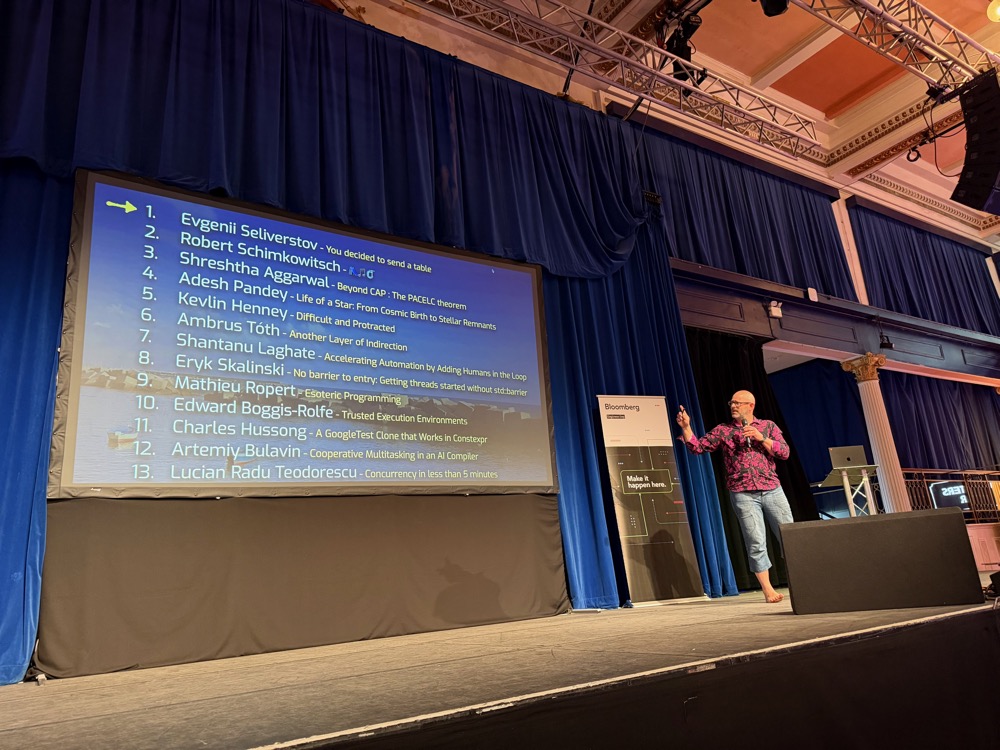
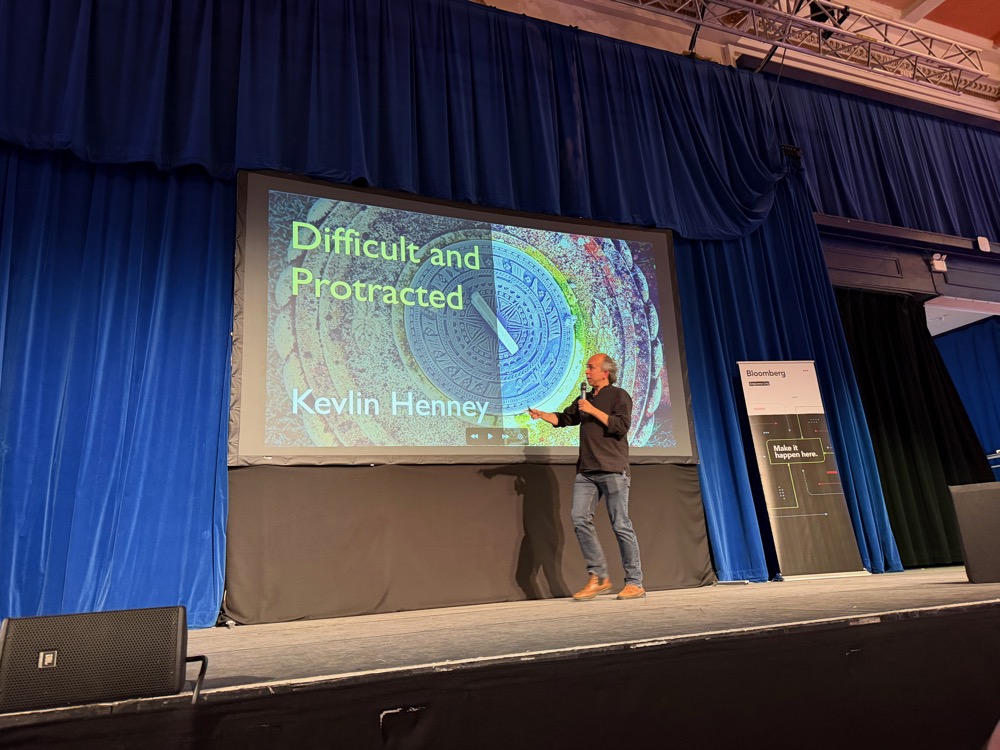
Highlights included Kevlin Henney’s “Difficult and Protracted,” Mathieu Ropert on esoteric programming, Adesh Pandey on the life of a star, Shreshtha Aggarwal on the PACELC theorem, and Lucian Radu Teodorescu squeezing “Concurrency in less than 5 minutes.”
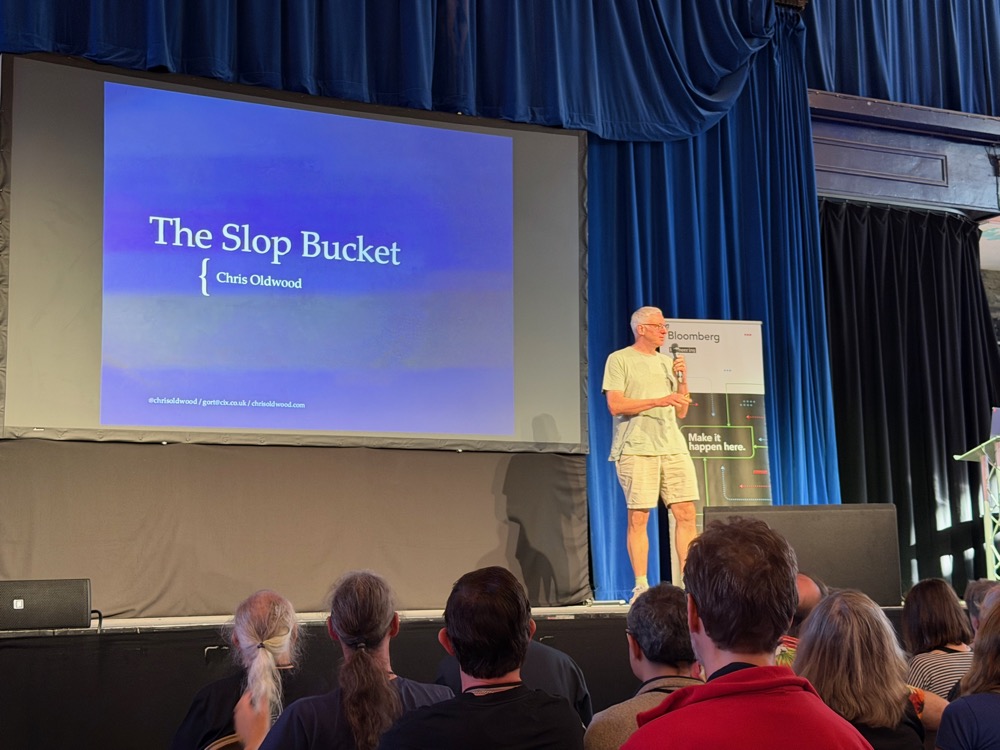
Chris Oldwood also took the mic with “The Slop Bucket” - a perfectly on-theme nod to the week’s obsession with AI-generated code.
Thursday 18 June
KEYNOTE - In the Beginning: A Genesis of Our Craft
Walter E Brown
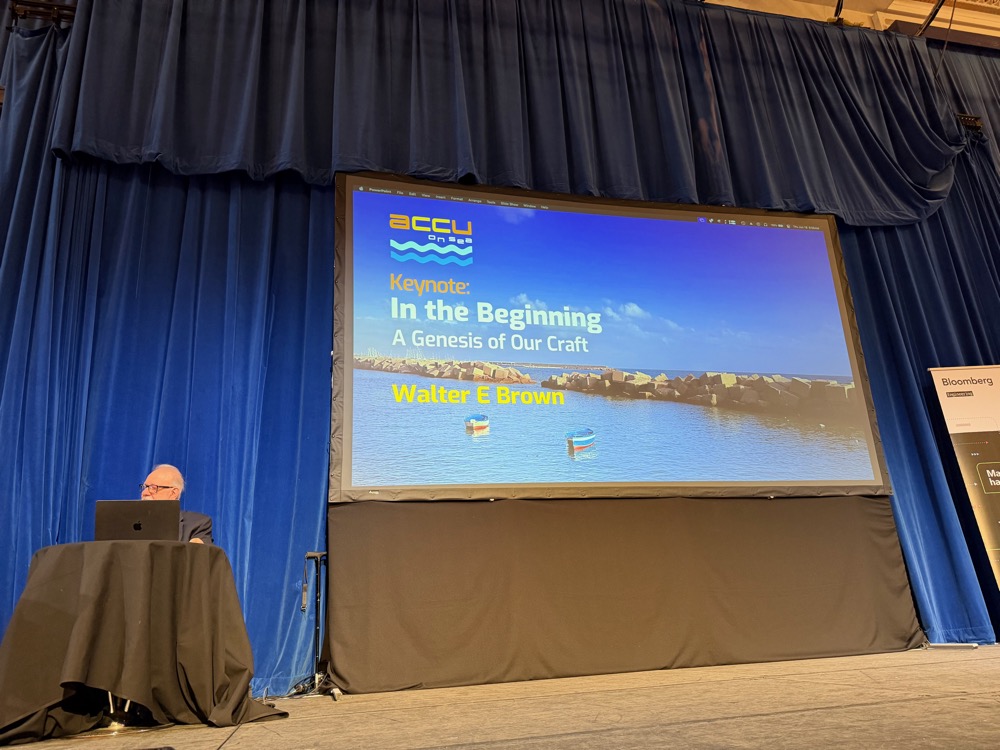
“By reviewing the past, we gain new insights.” Walter took us back to the pioneering programming languages of the 1950s and traced how many idioms we cherish in modern C++ have roots there - part technical history, part reflection on our role as applied scientists. Fittingly for a talk full of archival film clips, he asked the room to put cameras away and not record, so the title slide above is the only frame I caught. You had to be there - which was rather the point.
Our Journey Toward a Fully Backward-Compatible, UB-Safe, ISO C++
John Lakos
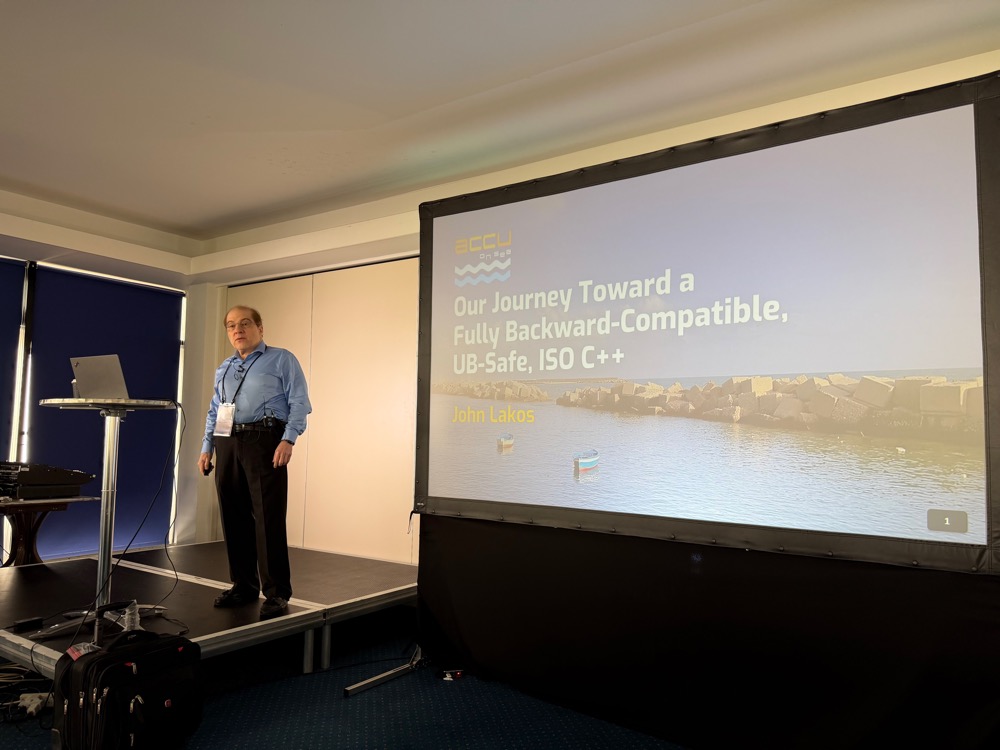
John laid out an uncompromising vision for UB-safety: every potential
source of undefined behavior should be detectable via runtime checking,
which eliminates the very notion of “safe” and “unsafe” regions of a
program - there’s nowhere for UB to hide, and no need to switch languages
or subsets. He showed how C++26 Contracts provide the foundation, letting
teams spend their runtime-checking budget exactly where it’s most
valuable, and sketched an incremental path that applies not just to new
code but to the vast body of existing C++ already in the wild.
I have personal reservations about the feasibility of such claims, but I’ll reserve these comments till the end/conclusions of the report, since more sessions in the program had this topic (Contracts).
Creating Composable Callables in Contemporary C++
Björn Fahller
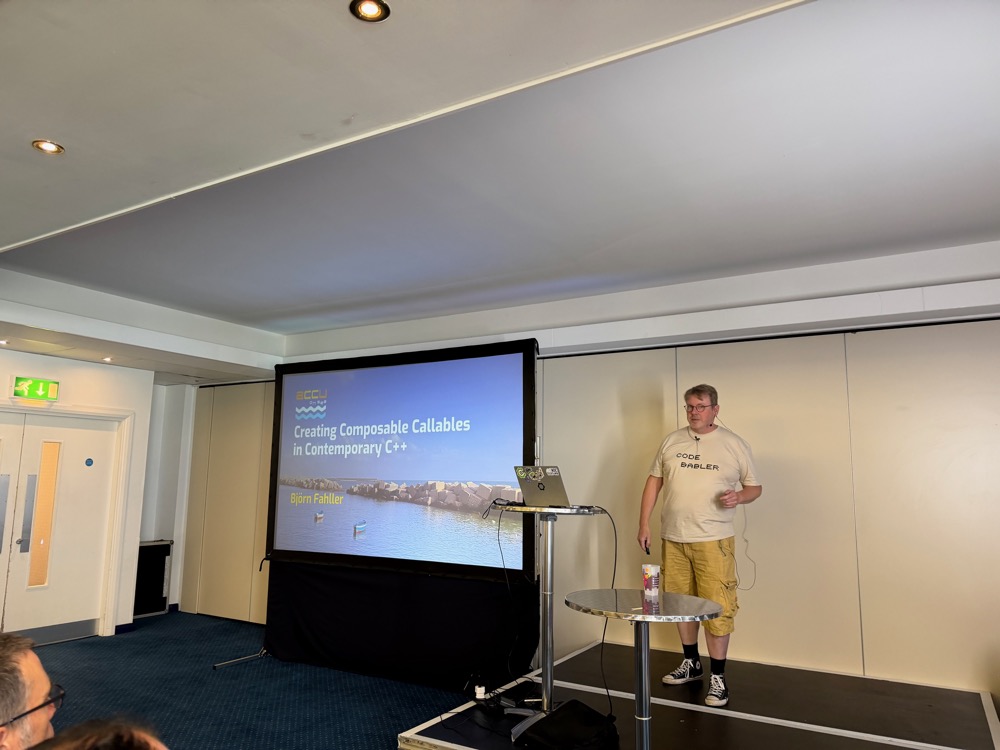
Ranges made C++ far more composable in C++20/23/26, but function objects are still surprisingly rare and rarely composable in everyday code.
Björn built up - with deliberate, gleeful scope-creep - a powerful and
easy-to-use toolkit of composable callables that, thanks to recent
language additions, requires remarkably little code. No runtime performance compromises.
As usual, Björn’s presentations and topics resonate very well with my personal thinking and preferences.
CallMeMaybe: Building Modern Runtime Reflection via C++26
Laurie Kirk
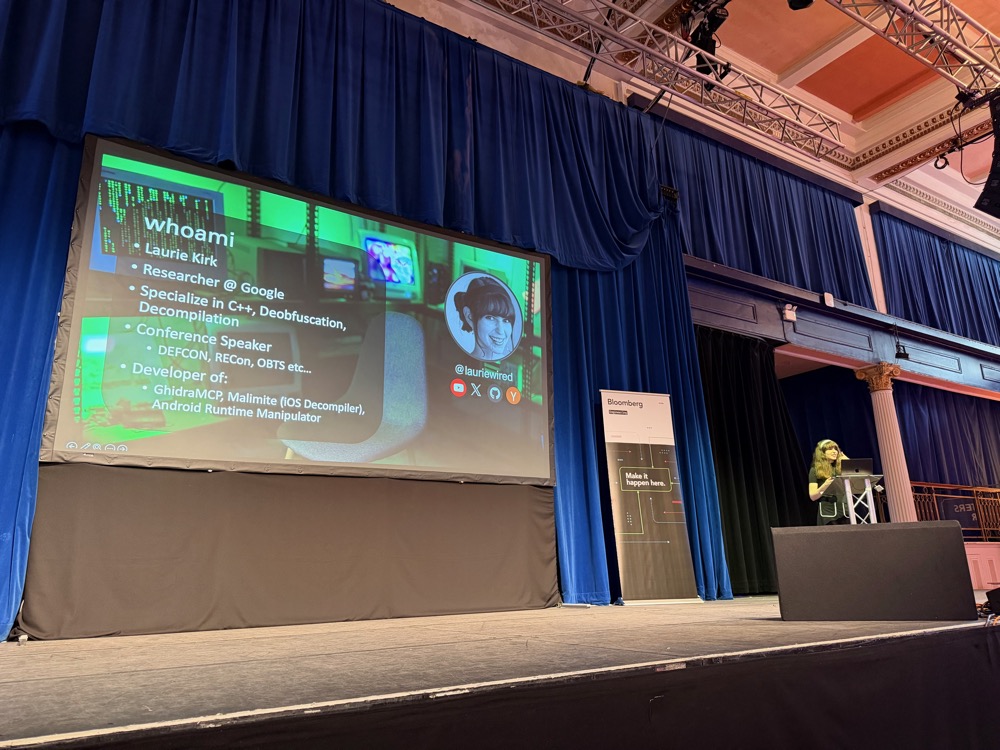
One of my favourites for sheer “I didn’t know you could do that” factor.
Using C++26’s new static reflection, Laurie built an automated, type-safe
runtime reflection registry that only pays for the classes that opt in - no manual macro registration (RTTR), no Qt moc, and none of the
Java-style overhead of storing metadata for every class. She covered
signature-based deduplication, invocation benchmarks, symbol stripping via granular reflection control, and “reflectable” profiles built from
attributes and concepts - then introduced a brand-new open-source library built on C++26 reflection.
🍿 Movie Night
Walter Brown
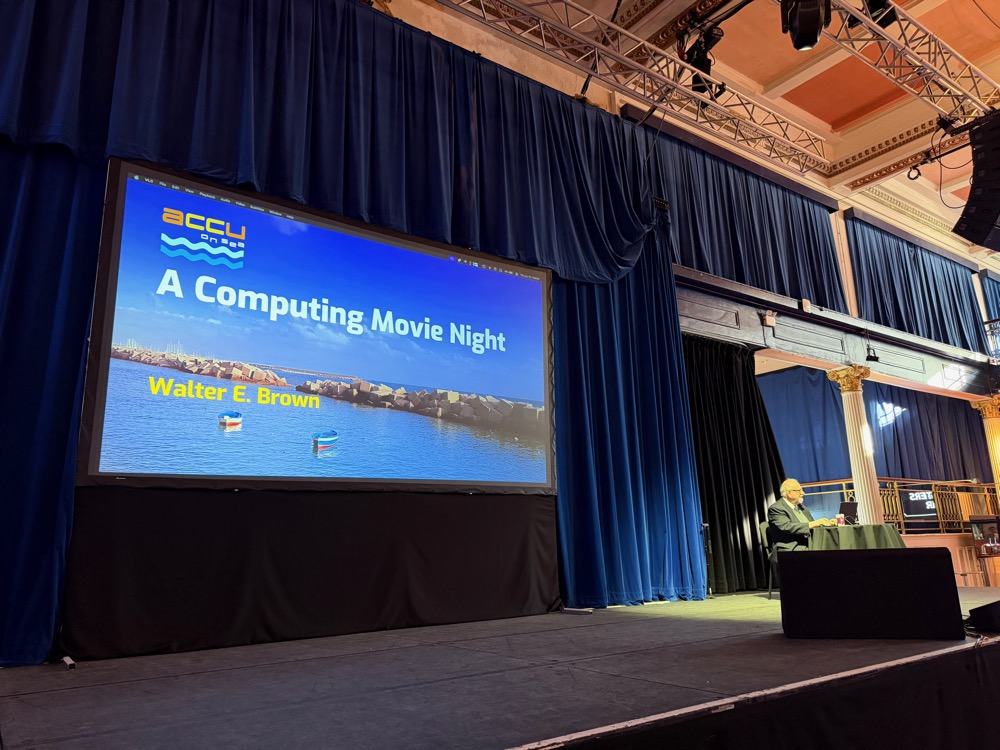
A lovely change of pace: an evening of video excerpts and short films celebrating the programming profession and reflecting on where our craft came from. Beer, kebabs, popcorn, and a full house.
Friday 19 June
The Performance Mindset
Mathieu Ropert
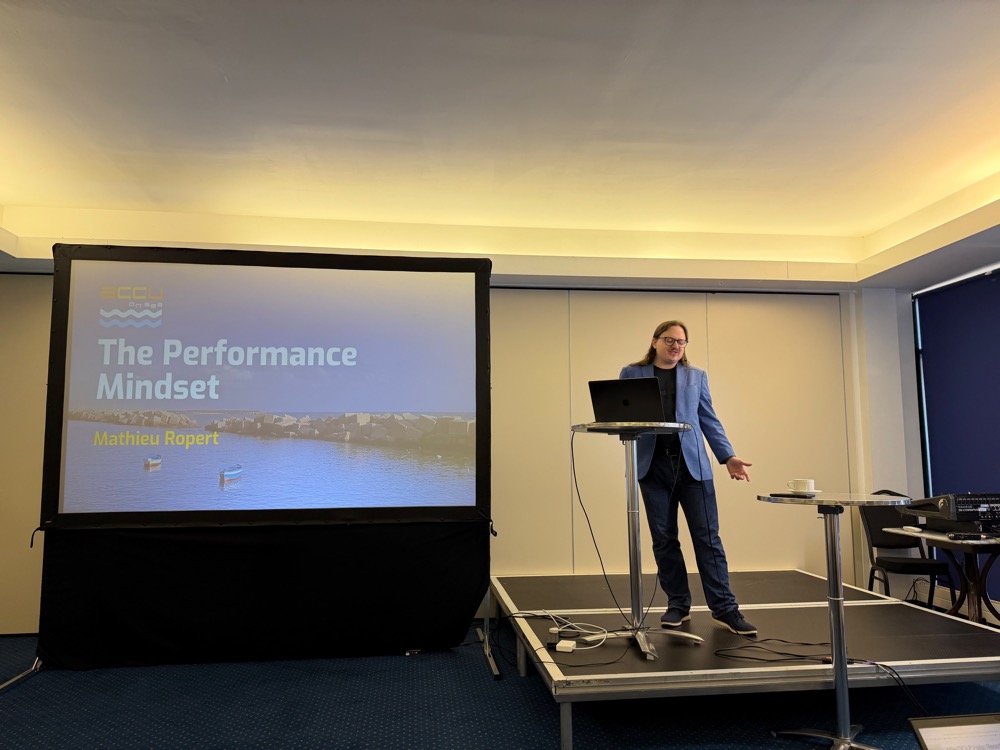
Performance is never an accident, and never an afterthought. Mathieu told the story of a 2x speed-up he made for a game as a side project - but the talk was less about the code and more about the mindset that made it possible: profiling, learning, planning, curiosity, and plain personal motivation. Mathieu is an entertaining speaker, so the hour just flew by :)
Stop Boiling Your Frogs: High Impact Fixes to Problems of Scale
Lara Bailey
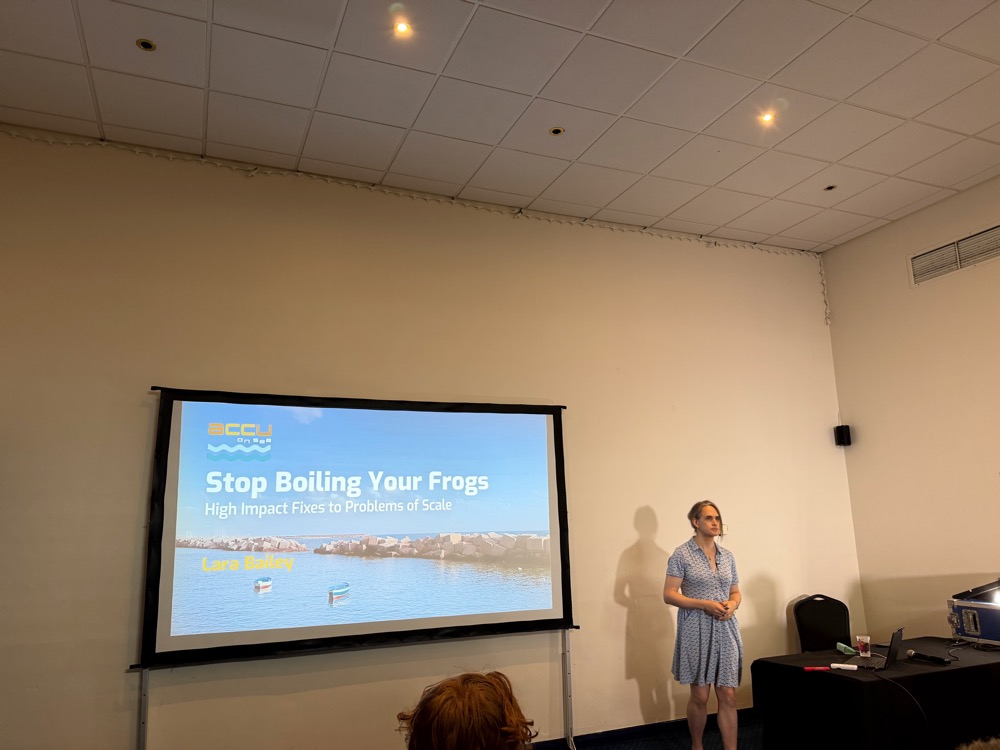
Reasonable-looking code often misbehaves only at scale. Lara showed how to
hunt for the highest-leverage places to intervene, where a small
engineering effort yields an outsized win. The memorable examples: two C++
classes used just outside their design space were quietly exhausting
memory in a data-warehouse build; swapping them for better-suited ones
turned multi-hour builds into minutes and cut memory use by an order of
magnitude.
Slow paced, insightful reflection on how to do better engineering. Packed room and lovely audience interaction. Very ACCU-like!
Software and Safety
Anthony Williams
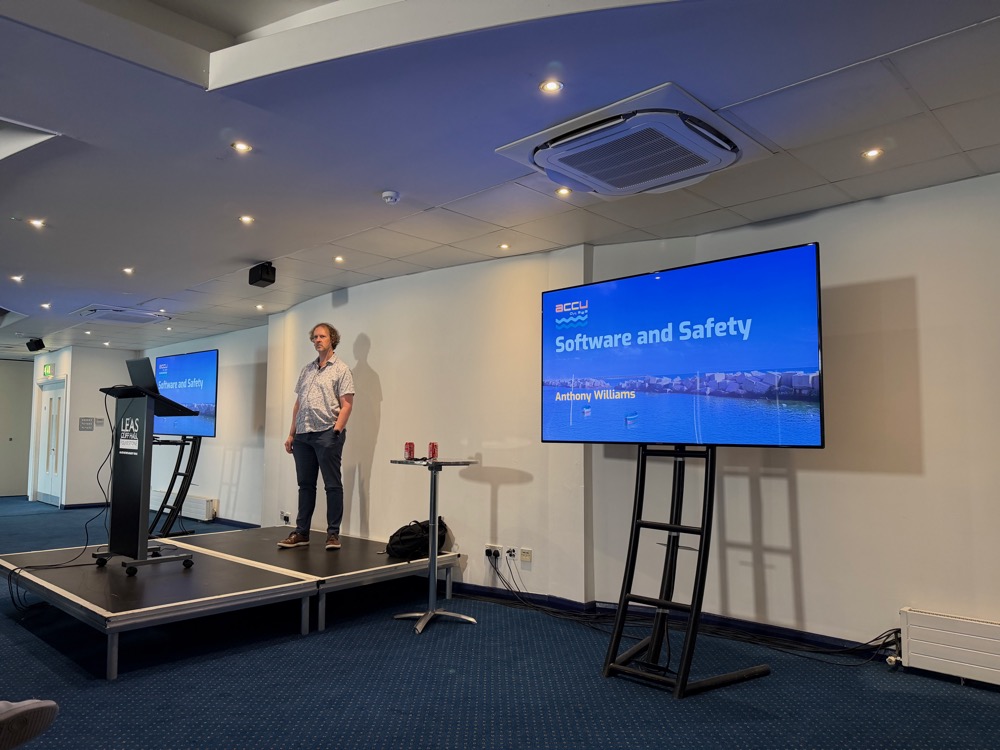
Software is everywhere - toasters, pacemakers, cars, trains, the public services running quietly in the background. Anthony asked what end-users actually mean when they call software “safe,” how that maps to what we do as developers, and what we - specifically as C++ developers - should be doing to meet those expectations. Very wide/high-level presentation, but profound in its messaging for the community, not just for safety-critical industry.
KEYNOTE - Out of Our Minds: What is AI Doing To Us and For Us?
Yvonne Rogers
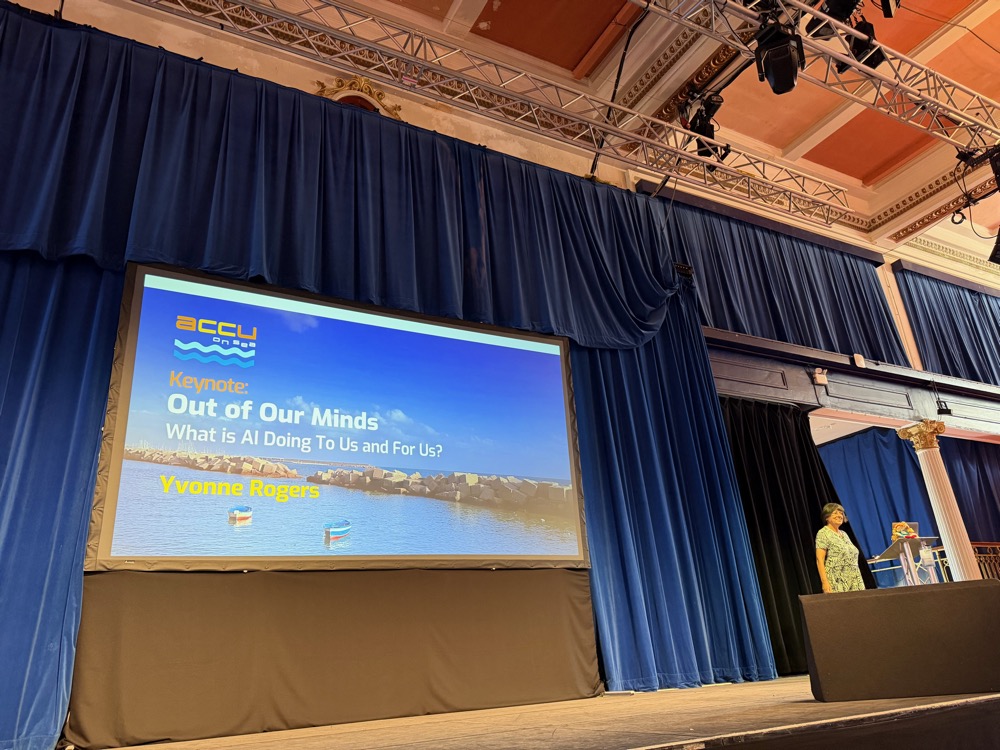
A perfect human-computer-interaction counterweight to the week’s C++ deep
dives. The phrase “out of our minds” refers to how we externalize and
offload cognitive work - through writing, drawing, talking - and GenAI is
the latest, very different tool for doing it. Yvonne explored the paradox
of effort: outsourcing our thinking to AI can make work less effortful
but also less rewarding. Her challenge to the room: how do we design AI
tools that make work more effortful and more rewarding, supporting
better reasoning and - in the coming agentic era - genuinely collaborative
decision-making?
Dr. Rogers took ample time to answer a lot of audience questions at the end. Lots of interest in this topic!
Saturday 20 June
The Code is Documentation Enough
Tina Ulbrich
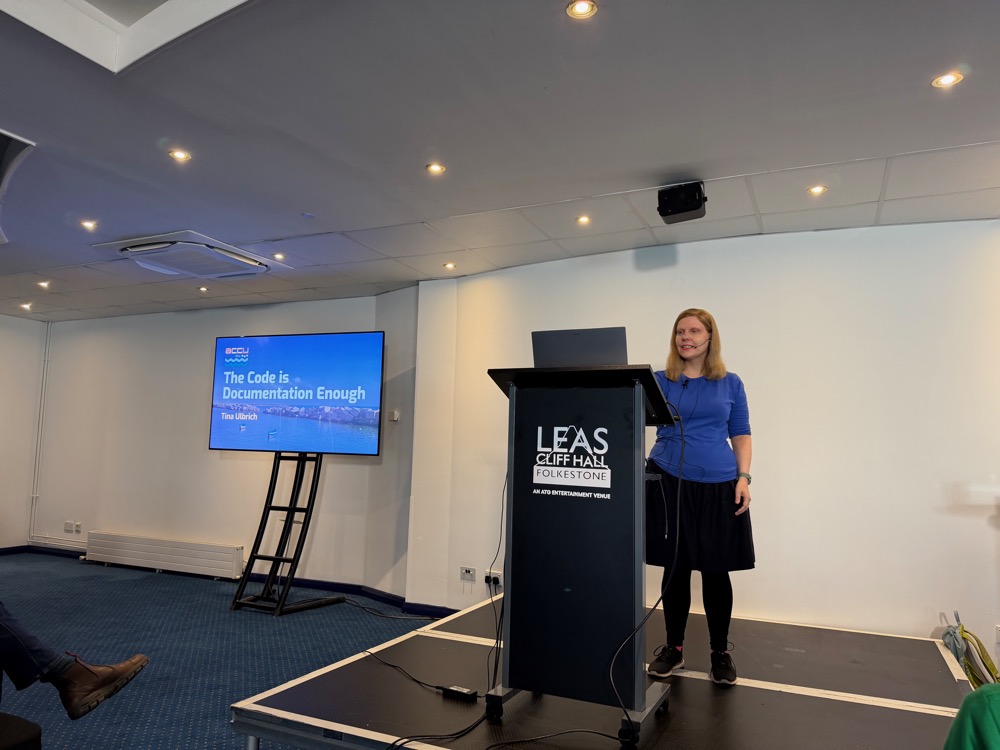
Click-bait title, of course. But the presentation was profound and very well delivered. With lots of code examples.
Opening with Stroustrup’s “the compiler does not read comments, and
neither do I,” Tina made the case for self-documenting code: how to name
variables and functions, which language features improve readability, and
how unit tests can serve as living documentation of intended usage. And,
honestly, where a comment really is the right tool - and how to write a
good one.
Microarchitecture: What Lies Beneath
Matt Godbolt
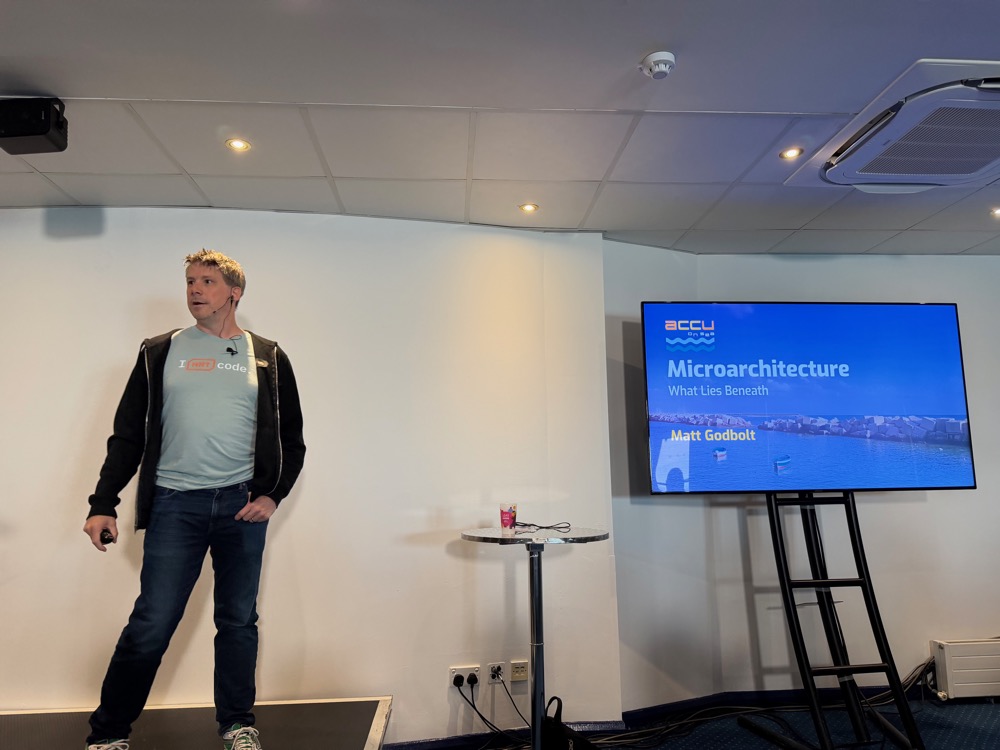
You know modern CPUs do out-of-order execution and branch prediction; Matt
went much deeper, into the guts of Intel Skylake - register files,
schedulers, memory disambiguation - following a real code snippet down the
pipeline into the real-world complexity that the textbooks skip. Essential
for latency-sensitive systems, and genuinely fascinating for everyone
else.
The room was overflowing, the presentation was packed with information and Matt did a great job keeping the crowd engaged with a very complex topic and lots of information.
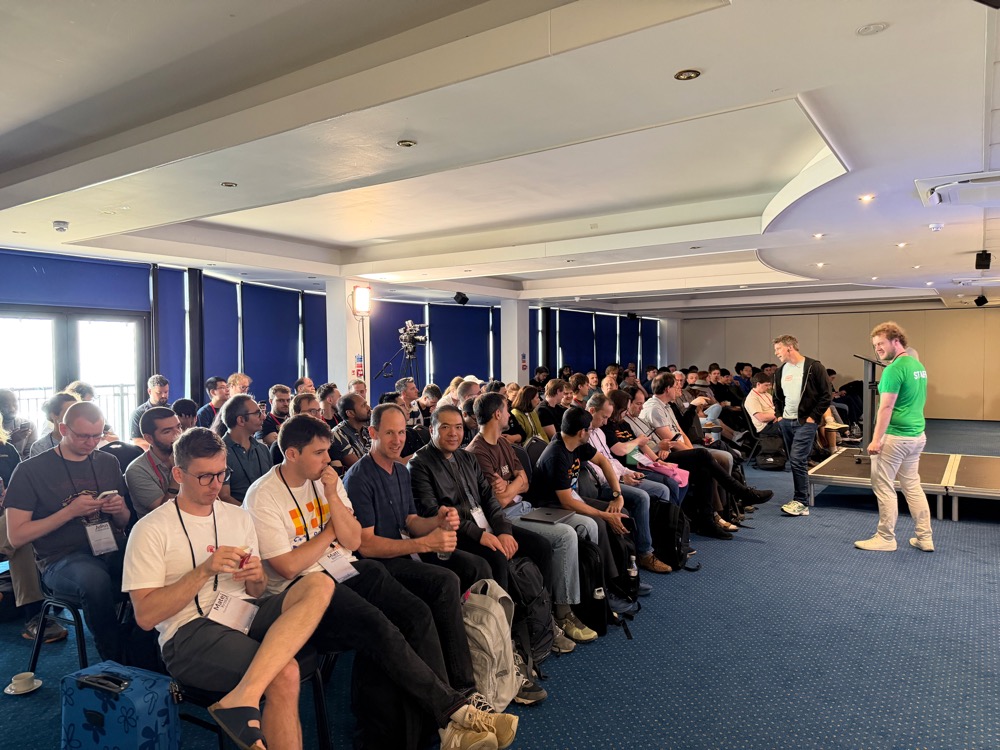
The Future of C++ Is Memory Safe
Jon Bauman
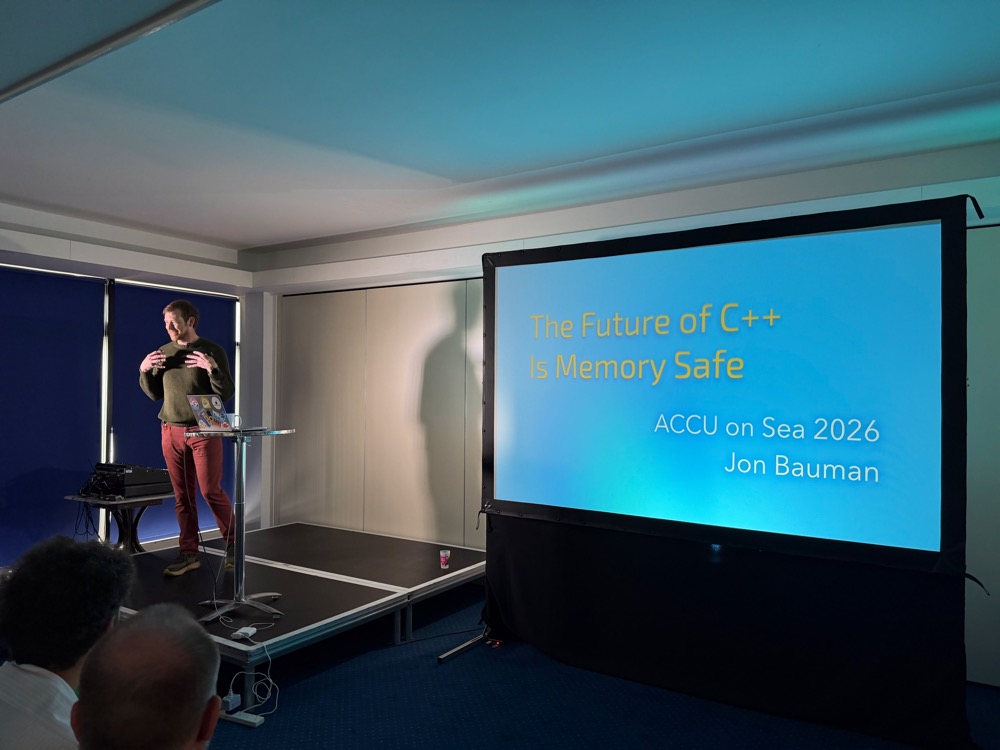
C++ rose to prominence decades before memory safety was a mainstream concern, yet the vast majority of security vulnerabilities are memory-safety bugs, and the pressure from industry, academia, and governments keeps growing. Jon’s optimistic thesis - backed by results from some of the largest C++ codebases in the world - is that the vast majority of old code does not need to be rewritten, and that C++ can and should evolve to give new code memory safety, securing the language’s future. This is a particularly interesting take since Jon comes from the Rust world, and just recently refocused his attention to securing C++.
CLOSING KEYNOTE - Incrementally Securing Your C++ Using Rust
Taylor Cramer
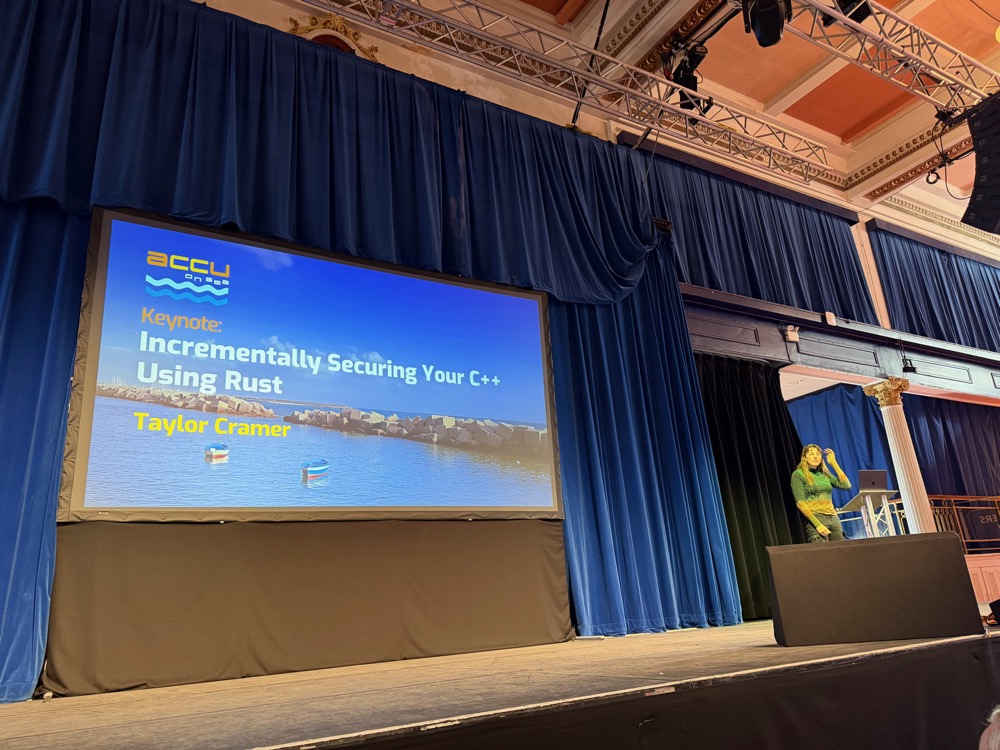
The week’s two big themes - AI and memory safety - collided in the closing keynote. Systems software runs on C and C++, and AI now makes vulnerabilities easier than ever to find and exploit before they can be patched. Taylor’s pitch: you don’t have to choose between “keep your C++” and “rewrite everything in Rust.” Using Rust libraries, cross-language interop tooling, and a sprinkle of AI, teams can adopt memory safety incrementally - specifically through Crubit, the Rust/C++ interop tool that Taylor’s team is building.
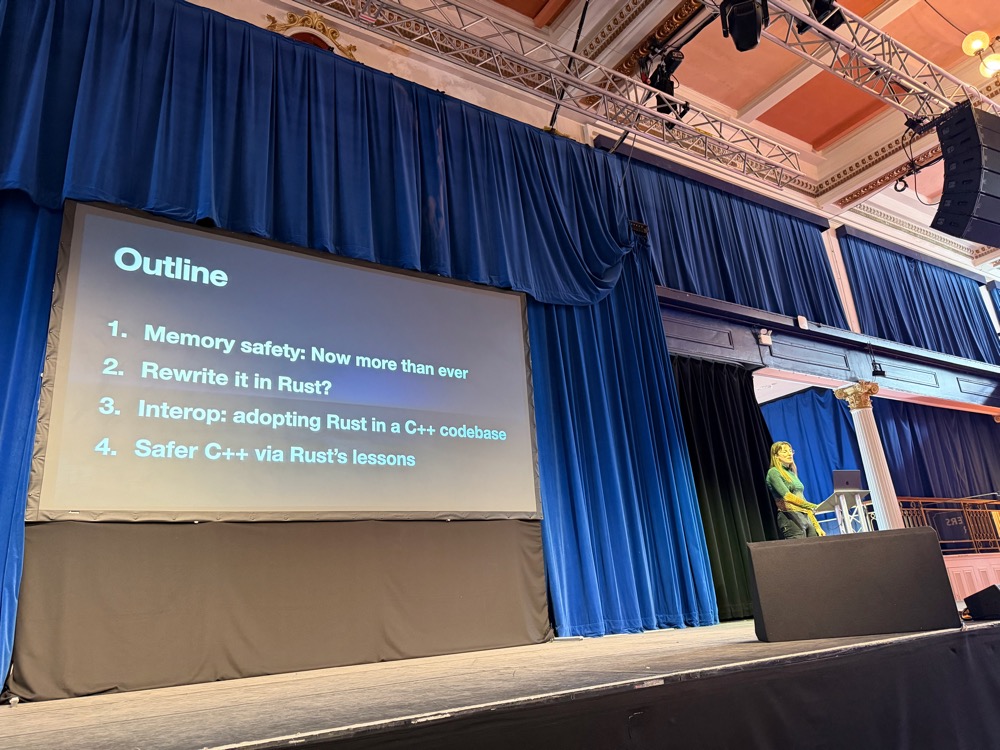
The presentation pillars framed it neatly: memory safety (now more than ever), rewrite it in Rust, smooth interop - adopting Rust in a C++ codebase, and safer C++ via Rust’s lessons.
Taylor’s closing plenary was the perfect bookend for my own presentation at the beginning of the conference: Rust for The Curious C++ Developers.
The Hallway Track
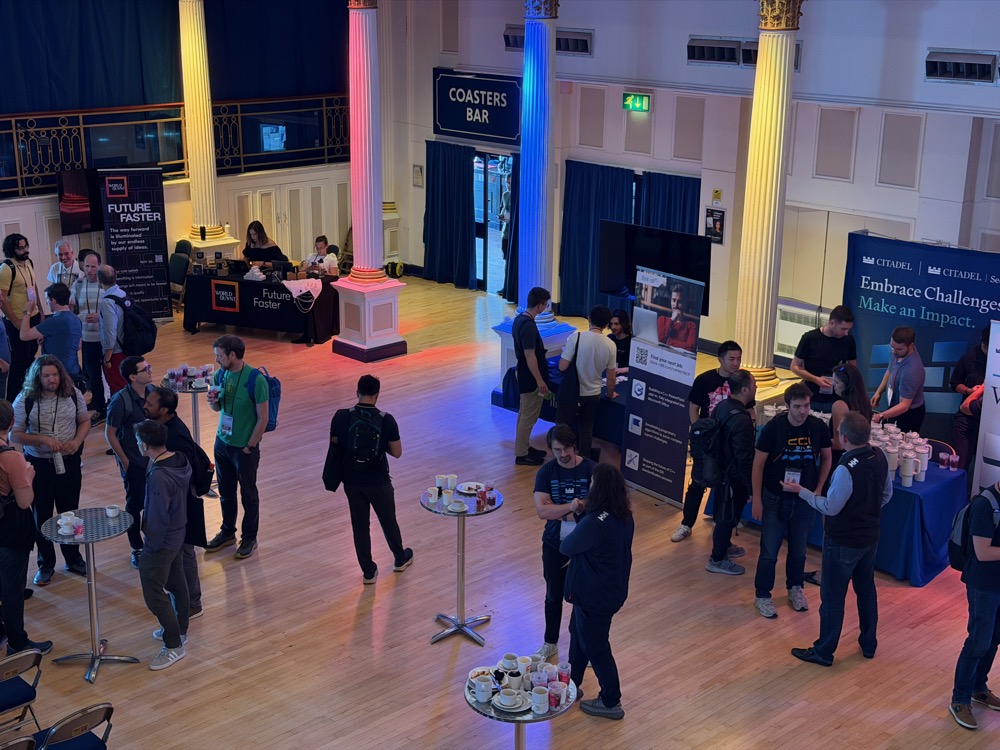
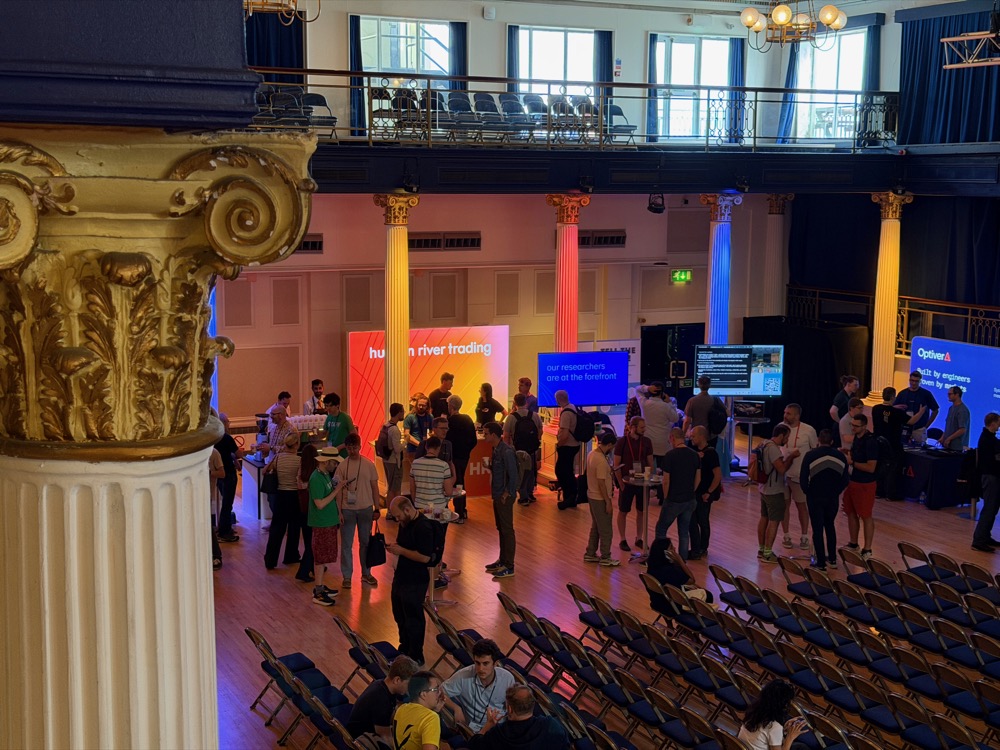
A conference is much more than its talks, and ACCU on Sea nailed the in-between. The grand main hall regularly filled to the back, where the sponsor exhibition spilled around the gilded columns of the Victorian-style theater.
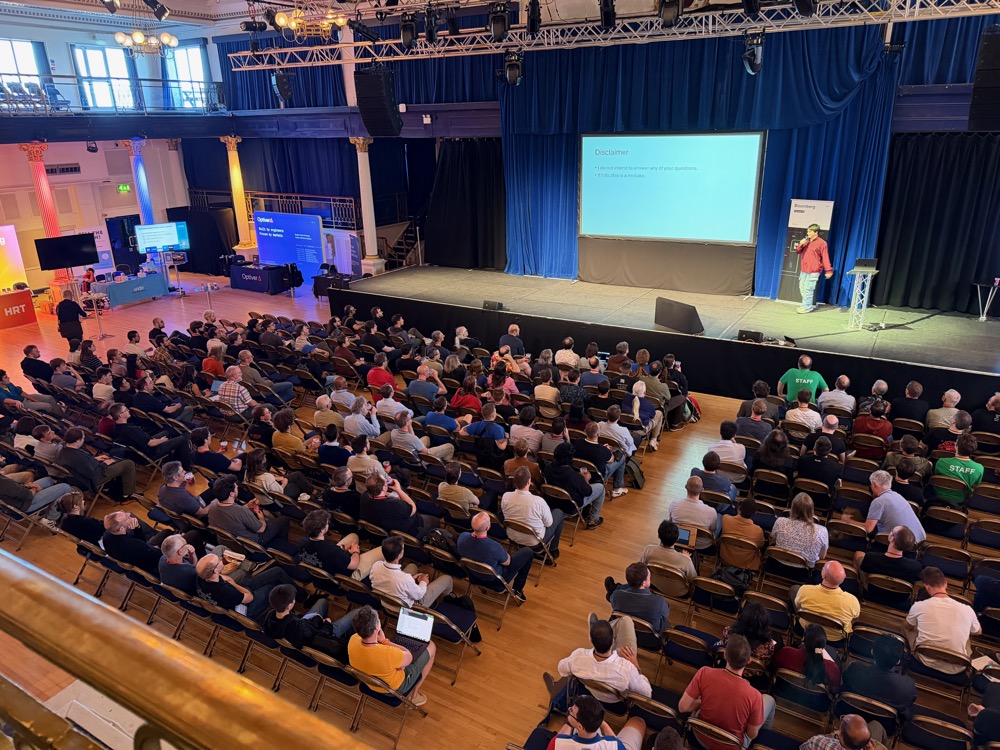
Sponsors: The exhibition was a roll-call of the systems-and-finance C++ world - Bloomberg, Hudson River Trading, Optiver, Citadel Securities, WorldQuant, think-cell, Undo, G-Research, Ripple - with the requisite swag, coffee, and recruiting energy.
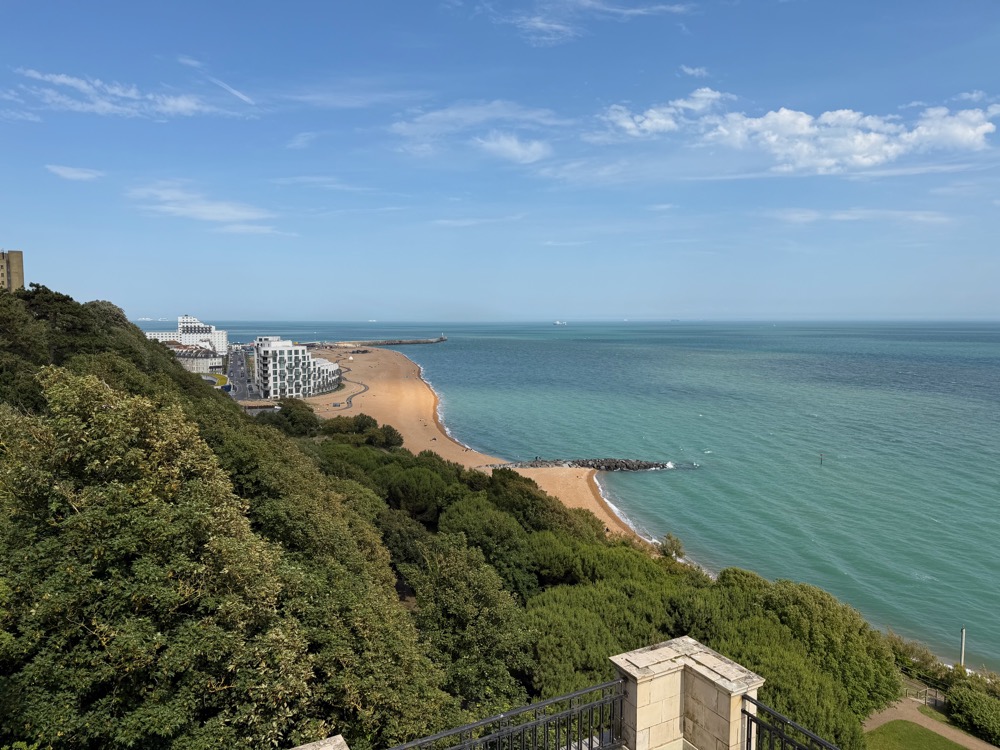
And then there was the setting. Few conferences offer a coffee break with this view: the Folkestone seafront, the harbour arm, and the Channel stretching out to the horizon.
Themes I took home
- AI is the new substrate. Two keynotes (Alexandrescu, Rogers) and a
thick seam of talks treated AI not as a novelty but as a force reshaping
what software engineering is - shifting the prize from producing code
to understanding systems, and asking hard questions about effort,
judgment, and what we offload.
The Age of Inversions: Now that code production is commoditized (and automation keeps accelerating it), the balance tips hard from producing code to reviewing, understanding, and being accountable for it. Programming fluency gets de-emphasised, and a set of genuine role reversals emerges - from creator in control of primitive systems to accountability sink of AI systems. - Memory safety has gone mainstream - and pragmatic. The closing keynote, Bauman’s talk, and Lakos’s UB-safety work all converged on the same pragmatic answer: don’t rewrite the world; secure new code and adopt safety incrementally (Rust interop, contracts, runtime checks).
- C++26 Reflection is arriving in force. People are already finding new interesting scenarios where this might become a game changer. I’ve already seen a few cool ideas at this conference, but I’m sure this is just the beginning of 10+ years of innovation and abuse to come :)
- C++26 Contracts: promise and pushback. Contracts were the thread running through the safety conversation - Teodorescu using them to separate safety from correctness, and Lakos building a whole UB-safety vision on them, where every source of undefined behavior becomes detectable at runtime with the cost paid only where you can afford it. The honest counterpoint: the most common UB is a lifetime error - use-after-free and friends - and there’s no magic incantation you can write for that; configurable runtime assertions have existed for 35-40 years, yet we still had to built something like Rust to solve the industry problem for good 😈. Contracts look less like a silver bullet than a genuine-but-partial step forward - a standardized construct compilers and sanitizers can both reason about, without by itself making C++ truly safe.
It’s a wrap
Looking forward to the next year’s conference by the sea! In the meantime, I have a bunch more C++ and Rust conferences in my 2026 calendar…